
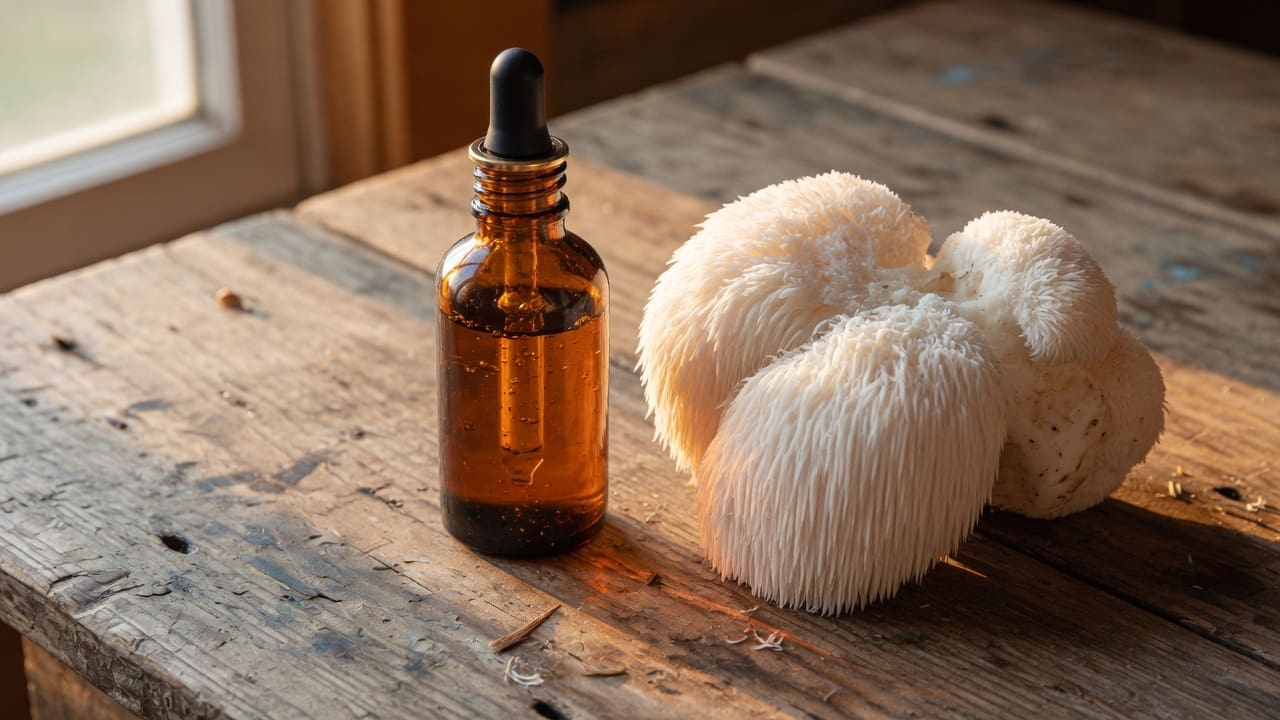
If you’ve ever shopped for a mushroom tincture and felt lost in a sea of similar-looking bottles making similar-sounding claims, you’re not alone. The functional mushroom supplement market has exploded — and so has the confusion around it.
One term you’ll see used by quality producers — and quietly skipped by the ones cutting corners — is dual extraction. It sounds technical. It isn’t, really. And once you understand it, you’ll never look at a mushroom supplement the same way again.
The Short Answer
Dual extraction is a process that uses both hot water and alcohol to pull the full spectrum of beneficial compounds out of a mushroom. Use only one or the other, and you’re leaving a significant portion of the mushroom’s potential on the table — literally.
That’s the short version. Here’s why it matters.
Mushrooms Are Chemically Complex — And That’s the Point
Functional mushrooms like Lion’s Mane, Reishi, Chaga, Cordyceps, and Turkey Tail contain two major categories of beneficial compounds. The problem is that they don’t dissolve in the same thing.
Water-Soluble Compounds: Beta-Glucans
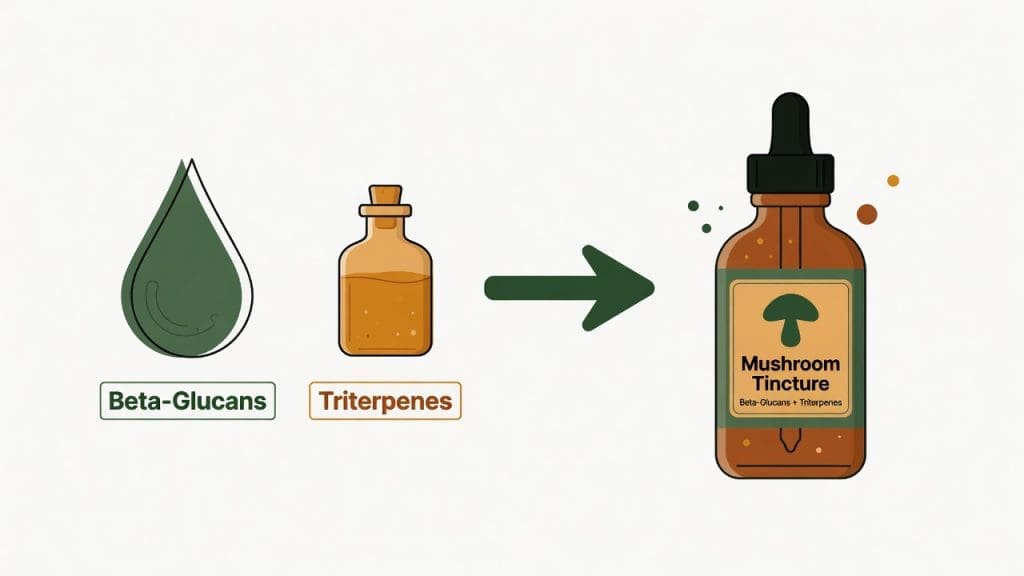
Beta-glucans are the heavy lifters of the mushroom world. These complex polysaccharides are responsible for much of what makes functional mushrooms so valued — particularly their well-documented effects on immune modulation and cellular health. They’re also the compounds most likely to be cited in peer-reviewed research.
Beta-glucans dissolve readily in hot water. Think of them like making a tea — steep the mushroom long enough at the right temperature, and you’ll pull them out effectively.
Alcohol-Soluble Compounds: Triterpenes
Here’s where it gets interesting. Mushrooms — especially Reishi and Chaga — also contain triterpenes: a family of bioactive compounds associated with adaptogenic, anti-inflammatory, and liver-supportive properties. Triterpenes are the reason Reishi has been used in traditional Asian medicine for centuries.
Triterpenes do not dissolve in water. No matter how long you steep a Reishi mushroom in hot water, you will not meaningfully extract its triterpene content. You need alcohol — specifically, a food-grade ethanol — to pull them out.
This is where most cheap mushroom tinctures fail.
What Is Water Extraction?
Water extraction is exactly what it sounds like: mushroom material is steeped or decocted in hot water, typically for an extended period, to draw out the water-soluble compounds — primarily beta-glucans and polysaccharides.
A hot water extraction produces a dark, tea-like liquid that captures the immune-supportive compounds well. It’s a legitimate method — and for certain mushrooms and certain goals, it can be sufficient. But on its own, it’s an incomplete picture of what the mushroom has to offer.
What Is Alcohol Extraction?
Alcohol extraction (also called a tincture or maceration) involves soaking mushroom material in a food-grade alcohol solution — typically ethanol — over a period of days or weeks. The alcohol acts as a solvent, dissolving and preserving the fat-soluble compounds, including those triterpenes that hot water simply can’t capture.
An alcohol-only extract is also a valid product — and historically, “tincture” usually referred to an alcohol extract. But used alone, it under-delivers on the beta-glucans that many customers are specifically after.
What Is Dual Extraction — and Why Does It Matter?
Dual extraction combines both methods: the mushroom material undergoes both a hot water extraction and an alcohol extraction, and the two extracts are combined into a single finished product.
The result is a tincture that contains the full spectrum of the mushroom’s bioactive compounds — water-soluble and alcohol-soluble alike. Nothing is left behind.
Think of it this way: if a hot water extract is a photograph of a mushroom’s front side and an alcohol extract is a photograph of its back, dual extraction is the complete, three-dimensional picture.
For mushrooms like Reishi, Chaga, and Lion’s Mane — where the value lies in both categories of compounds — dual extraction isn’t a premium feature. It’s the baseline for a product that actually delivers.
What Happens When You Skip Dual Extraction?
A single-method extract isn’t necessarily a bad product — it’s an incomplete one. If a brand is selling a hot-water-only extract without disclosing that, you’re potentially missing the triterpene content entirely. If they’re selling an alcohol-only tincture and marketing it for immune support without the beta-glucan profile to back it up, same problem.
The mushroom supplement market has very little regulatory oversight. Labels don’t have to specify the extraction method. Prices don’t reflect quality. A $12 bottle on Amazon and a thoughtfully produced dual-extracted tincture from a small farm can sit on the same virtual shelf — and only one of them is doing what it promises.
This is why knowing what to look for matters. And why we’re transparent about how we make everything we sell.
How We Do It at Steel Ridge Farm
At Steel Ridge Farm in Idalia, Colorado, every tincture we produce is dual-extracted from whole fruiting bodies — the actual mushroom, never the mycelium grown on grain that many supplement companies use as a cheaper alternative.
Our process:
- We start with the whole fruiting body. No myceliated grain. No fillers. The actual mushroom — the part that concentrates the compounds you’re paying for.
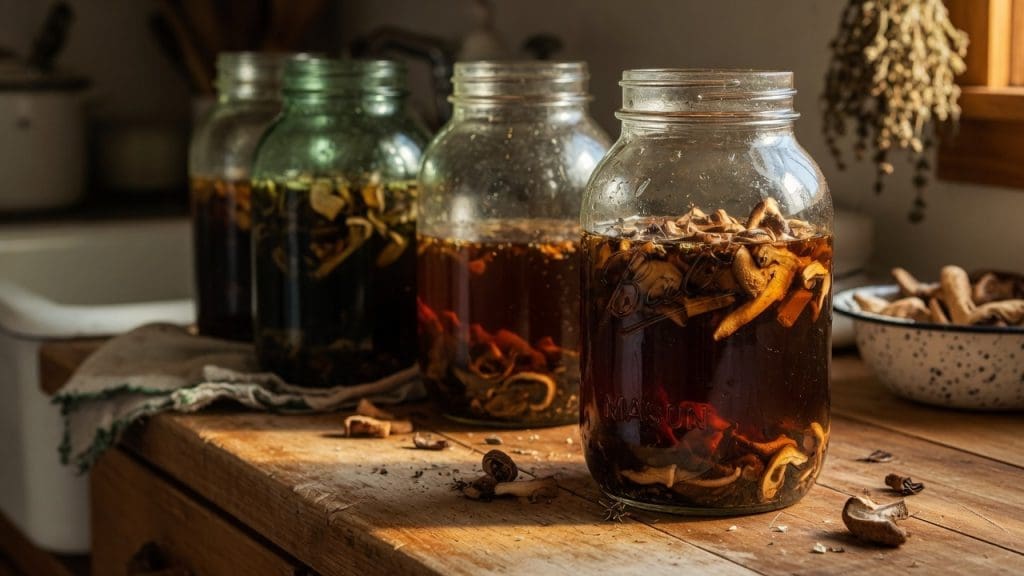
- Hot water extraction first. We decoct the mushroom material in hot water to pull the beta-glucans and polysaccharides.
- Alcohol extraction second. The material is then extracted in food-grade ethanol to capture the triterpenes and other alcohol-soluble actives.
- The two extracts are combined. The final tincture contains both — the complete picture of what that mushroom has to offer.
Our Lion’s Mane SUPER Extract takes this a step further: it’s a 3× concentrated extract, meaning it delivers three times the mushroom material per drop compared to a standard 1× tincture. Same process. More potent result.
How to Tell If a Tincture Is Dual-Extracted
When shopping for any mushroom supplement, here are the questions to ask:
- Does the label say “dual extraction”? If it doesn’t mention extraction method at all, assume it’s single-method.
- What’s the base material? Look for “whole fruiting body.” If it says “mycelium,” “mycelial biomass,” or anything involving grain or rice, the product is likely made from myceliated grain — a cheaper substrate with a fraction of the active compound content.
- What’s the alcohol percentage? A dual-extracted tincture will have a measurable alcohol content, typically listed as a percentage. If it claims to be a tincture with 0% alcohol, it isn’t a true dual extract.
- Is beta-glucan content listed? Quality producers will often list beta-glucan percentage as a marker of potency.
These aren’t trick questions. They’re the questions any producer who’s proud of their process will be happy to answer.
Ready to Experience the Difference?
Explore our full lineup of dual-extracted, whole fruiting body tinctures — grown on our family farm in Idalia, CO, and shipped directly to your door.
→ Try the Core Four Bundle — our four best-sellers, bundled at 20% off
→ Lion’s Mane SUPER Extract — our 3× concentrated best-seller
Faith. Family. Fungi. — Steel Ridge Farm, Idalia, CO
